(!) Online orders may be adjusted or canceled in the event of pricing errors or unavailable items.

Inverts Bay
White Spotted Grouper
White Spotted Grouper
Couldn't load pickup availability
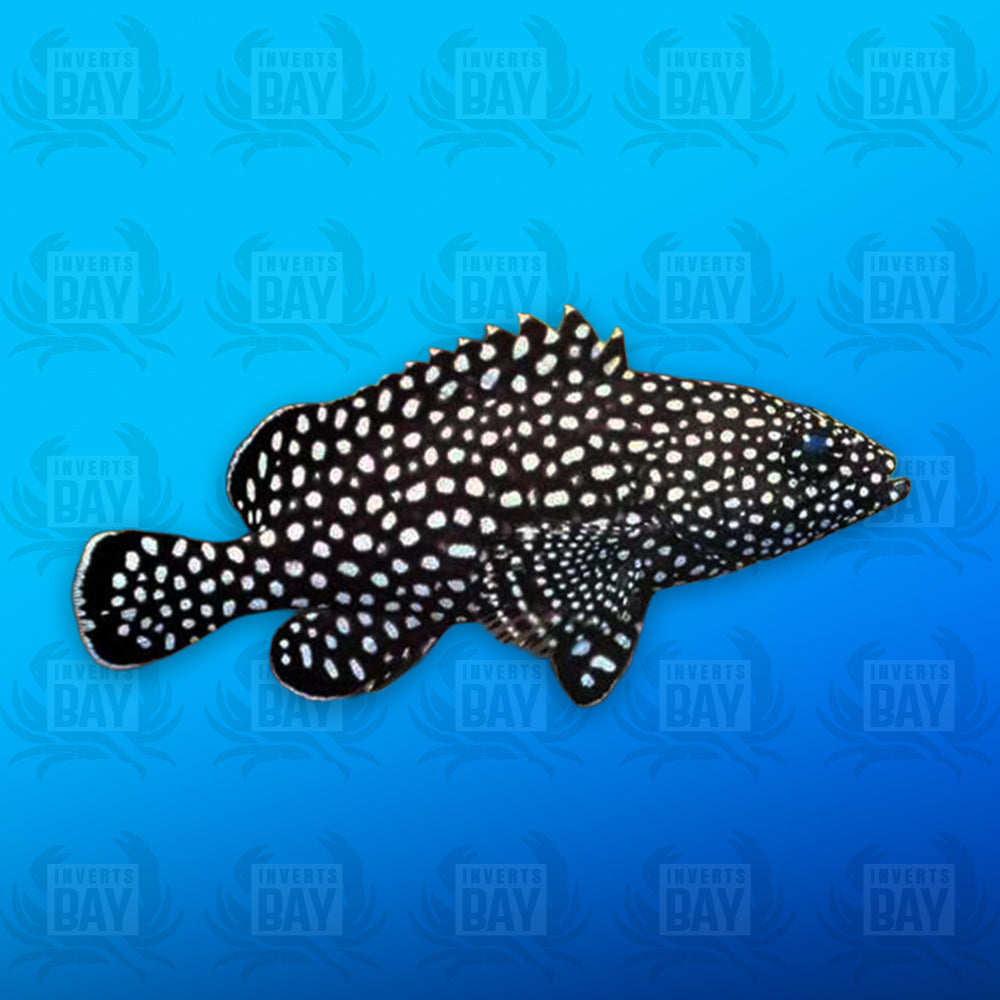
White Spotted Grouper (Epinephelus maculatus)
The White Spotted Grouper (Epinephelus maculatus), commonly known as the Highfin Grouper,is adistinctive marine predator recognized for its attractive spotted coloration and unusuallytall front dorsalfin. Its appearance changes as it matures, with juveniles displaying a dark bodywith contrasting whiteblotches that gradually develop into a lighter brown coloration coveredin numerous closely spaced darkbrown spots. Native to the tropical Indo-West Pacific, thisspecies inhabits coral reefs, lagoons, and rockyreef environments, where it typically sheltersaround coral formations and rocky structures. Althoughrelatively manageable in size comparedwith some larger grouper species, it can reach approximately 24inches (60 cm) and requiresa spacious aquarium, excellent filtration, and a suitable carnivorous diet. Itspredatory instinctsmake it unsuitable for reef aquariums containing small fish and ornamental invertebrates.
NOT REEF SAFE / EXPERT
Essential Information
Common Names: Highfin Grouper, White Spotted Grouper, Brown-Spotted Grouper,High-Finned Grouper
Scientific Name: Epinephelus maculatus
Family: Serranidae (Groupers)
Origin/Habitat: Native to the tropical Indo-West Pacific, with a distribution extending from theCocos(Keeling) Islands to Samoa, north to southern Japan, and south to southeastern Australia andLordHowe Island. It inhabits coral reefs, lagoons, and coastal reef environments, typically occurringaroundcoral rubble, isolated coral heads, and rocky reef structures. Juveniles are generally foundin shallowerreef habitats, while adults occupy deeper lagoon and seaward reef environments.
Maximum Size: Approximately 24 inches (60 cm) in length, with recorded specimens reachingaround60.5 cm.
Lifespan: Potentially 15–20 years or more with proper care. Exact captive lifespan data is limited.
Level of Difficulty: Expert; requires a large, mature marine aquarium, powerful filtration, stablewaterparameters, and a varied meaty diet. Its eventual size, predatory behavior, and substantialbioloadmake it unsuitable for most home aquariums.
Appearance & Physical Traits
Coloration & Pattern: The White Spotted Grouper undergoes noticeable coloration changes as itmatures.Juveniles are typically dark brown to nearly black with contrasting white blotches acrosstheir bodies.As they grow, these markings gradually develop into a lighter brown backgroundcovered with numeroussmall, closely spaced dark brown spots. Adults often display a distinctivepattern of spots arranged in adense, net-like or hexagonal appearance. Two faint dusky markingsmay also be visible along the body.
Body Shape & Structure: It has a moderately elongated, laterally compressed body with a relativelylargehead, broad mouth, and rounded tail fin. One of its most recognizable features is its unusuallytallanterior dorsal fin, which gives the species its common name, Highfin Grouper. The front portionofits spiny dorsal fin is noticeably taller than that of many other grouper species. Its powerful jawsandmuscular body are well adapted for capturing and consuming smaller fish and crustaceans.
Habitat & Environmental Needs
Minimum Tank Size: A minimum of 300 gallons (1,136 liters) is recommended for smaller specimens,with400–500 gallons (1,514–1,893 liters) or larger strongly recommended for long-term adulthousing. Alarger aquarium provides more swimming space and helps accommodate its substantialwaste production.
Water Temperature: Maintain between 74°F and 80°F (23°C to 27°C).
pH Level: Keep between 8.1 and 8.4.
Specific Gravity: Maintain between 1.023 and 1.026, with approximately 1.025 preferred.
Aquascape: Provide plenty of sturdy live rock and securely positioned structures with caves andshelteredspaces where the grouper can retreat. Its natural habitat includes coral rubble, rockyreef formations,and isolated coral heads. Allow sufficient open swimming space, particularly asthe fish grows. Ensureall rockwork is stable and cannot collapse if disturbed by this powerful fish.
Diet & Feeding
Diet Type: Carnivorous.
Preferred Foods: The White Spotted Grouper is an opportunistic predator that primarily feedsonsmaller fish and crustaceans in the wild. In captivity, offer a varied diet consisting of marineshrimp,krill, squid, chopped clams, mussels, and other appropriate seafood. High-quality frozencarnivorepreparations can also be incorporated into its feeding routine. Providing a varieddiet helps supporthealthy growth and overall condition.
Feeding Frequency: Juveniles can generally be fed once or twice daily, depending on their sizeandappetite. Adults can typically be fed several times per week, adjusting portions according tobodycondition and nutritional requirements. Avoid overfeeding, as groupers produce considerablewasteand can quickly contribute to declining aquarium water quality.
Behavior & Compatibility
Temperament: Generally not overly aggressive toward appropriately sized tank mates, but itis a predatoryfish with a strong feeding response. Any fish small enough to fit inside its mouthmay eventually becomeprey. Small crustaceans and ornamental invertebrates are also at risk.
Social Behavior: Typically solitary and does not require a school or group. It is generally bestmaintainedindividually unless housed in an exceptionally large aquarium with carefully selectedcompatible fish.Territorial behavior may develop toward other groupers or similarlyshaped competitors.
Tank Mate Compatibility: Suitable tank mates may include large angelfish, surgeonfish, robustwrasses,larger rabbitfish, and other appropriately sized marine predators. Tank mates mustbe large enough toavoid being swallowed and sufficiently robust to coexist with a grouper.Avoid small fish, ornamentalshrimp, crabs, and other small invertebrates. Careful considerationshould also be given to housingmultiple predatory species together.
Activity Level: Moderately active. It often spends time hovering around rockwork, resting nearshelteredareas, or slowly patrolling the aquarium. Like many groupers, it is an ambush predatorthat may remainrelatively motionless before quickly striking at potential prey.
Care Considerations & Additional Notes
Ease of Care: The White Spotted Grouper is an advanced marine species best suited forexperiencedaquarists. Although it does not reach the enormous size of some other grouper species,itseventual adult size, predatory feeding habits, and substantial bioload require considerableaquariumspace and consistent maintenance.
Special Requirements: This species requires excellent biological filtration, powerful proteinskimming,and regular water changes to maintain consistently high water quality. Its aquarium shouldbe mature,stable, and appropriately sized before introducing the fish. Provide secure rockwork,sufficient swimmingspace, and a tight-fitting aquarium lid to reduce the possibility of jumping. It isimportant to plan forits adult size rather than purchasing one based solely on its juvenile appearance.
Breeding Info: Captive breeding is uncommon and challenging in home aquariums. Like manygroupers,Epinephelus maculatus belongs to a group of fishes that exhibit complex reproductivebiology, with sexchanges occurring in some species. Successful reproduction generally requiresappropriate environmentalconditions, compatible mature individuals, and specializedbreeding facilities.
Additional Notes: The White Spotted Grouper is an attractive and relatively uncommon grouperspeciesthat can make an impressive centerpiece fish in a suitably large fish-only marine aquarium.Its distinctivehigh dorsal fin and changing spotted coloration make it particularly interesting as itmatures. However, itspredatory nature makes it unsuitable for reef aquariums containing ornamentalshrimp, crabs, and smallfish. It is best maintained in a large fish-only system with appropriatelysized tank mates. Juveniles maylook considerably different from adults, so prospective ownersshould understand how their coloration,size, and feeding requirements change throughouttheir development.
Important identification correction: The White Spotted Grouper (Epinephelus maculatus)is not the same species as the Panther Grouper (Cromileptes altivelis). The White SpottedGrouper is also commonlycalled the Highfin Grouper. Its juvenile black-and-white blotchesand adult brown spotted patternare important identification features.
Share