Inverts Bay
Marine Betta
Marine Betta
Impossible de charger la disponibilité du service de retrait
Marine Betta (Calloplesiops altivelis)
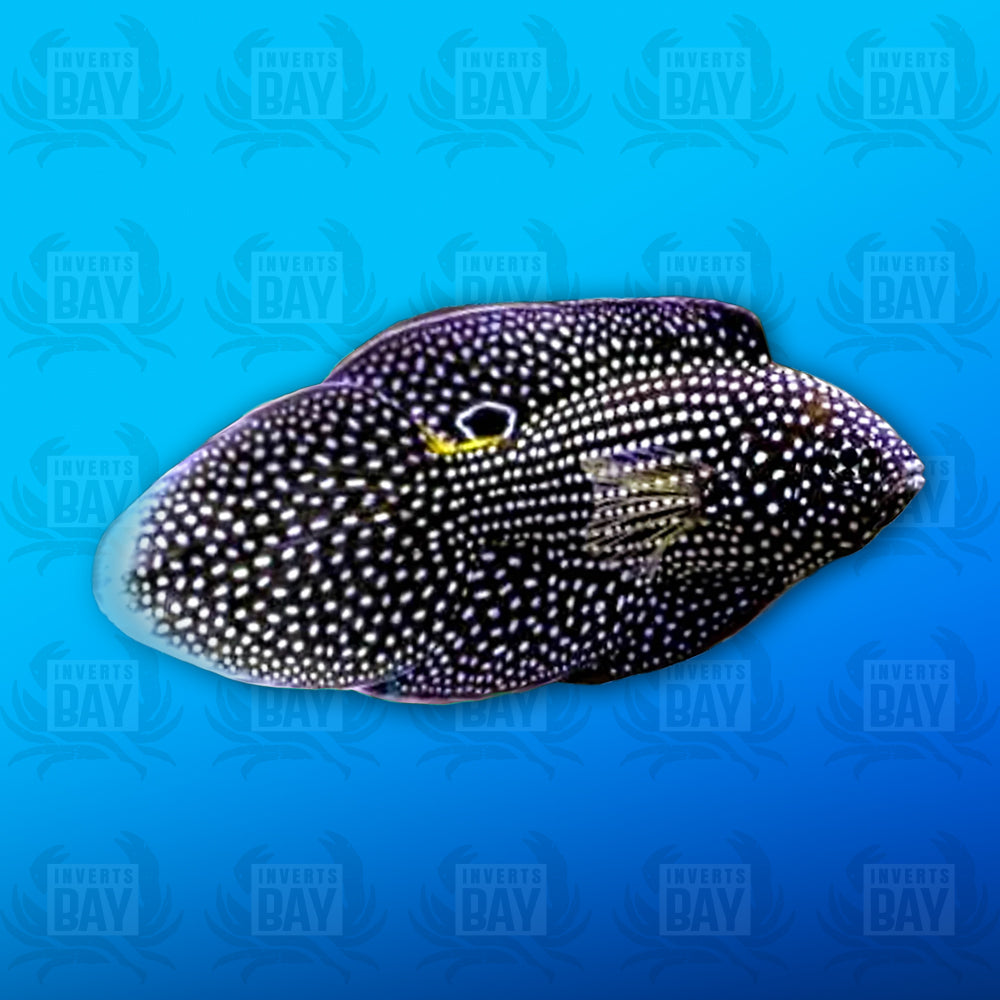
The Marine Betta (Calloplesiops altivelis), also commonly known as the Comet or Marine Comet,is astriking reef-associated fish recognized for its deep black body, brilliant white spotting,flowing fins,and distinctive eyespot near the base of its tail. Its elegant appearance and unusualdefensive behaviormake it one of the more fascinating species available to marine aquarists.Native to the tropical Indo-Pacific, this secretive fish inhabits coral reefs, caves, and rocky reefstructures, where it spends much ofits time sheltering in dark crevices and emerging primarilyduring low-light conditions. When threatened,it displays a remarkable defensive adaptationby positioning its body and fins to resemble the headof a moray eel, using its prominent taileyespot to confuse potential predators. Although generallypeaceful toward fish too large toswallow, the Marine Betta is a carnivorous predator that may consumesmall fish and ornamentalcrustaceans. It requires a mature, well-established marine aquarium withabundant hiding places,stable water parameters, and appropriately sized meaty foods. Its peacefultemperament anddistinctive appearance make it an excellent candidate for carefully planned communityaquariums,although compatibility with small fish and shrimp must be considered.
REEF SAFE WITH CAUTION / INTERMEDIATE–ADVANCED
Essential Information
Common Names: Marine Betta, Comet, Marine Comet, Comet Grouper, Betta
Scientific Name: Calloplesiops altivelis
Family: Plesiopidae (Roundheads)
Origin/Habitat: Native to the tropical Indo-Pacific, with a distribution extending from the Red Seaandeastern coast of Africa throughout the Indian Ocean and western Pacific, reaching as far east asTongaand the Line Islands. It inhabits coral reefs, reef slopes, caves, and rocky crevices, commonlyshelteringbeneath ledges and within dark reef structures. It is primarily a nocturnal species thatremains hiddenduring daylight hours and becomes more active around dusk and at night.
Maximum Size: Approximately 8 inches (20 cm) in length, although many aquarium specimensremaincloser to 6–7 inches (15–18 cm).
Lifespan: Approximately 8–10 years or potentially longer with proper care. Documented aquariumlongevityis limited, although individuals have been reported living for more than eight years.
Level of Difficulty: Intermediate to Advanced; requires a mature marine aquarium with plentyof hidingplaces, peaceful tank mates, stable water parameters, and a consistent supply ofappropriate meatyfoods. Newly imported specimens may be reluctant to accept preparedfoods and can require additionalattention during acclimation.
Appearance & Physical Traits
Coloration & Pattern: The Marine Betta has a predominantly dark brown to nearly black bodycoveredin numerous small, round white to pale blue spots. These markings extend across itshead, body, andfins, creating an attractive starry appearance that resembles a night sky. Oneof its most distinctivefeatures is a prominent dark eyespot, known as an ocellus, located nearthe rear portion of its dorsalfin. This marking is surrounded by a lighter blue or yellowish borderand plays an important role inits defensive mimicry. Its pectoral fins are relatively transparentwith noticeable yellow rays, whileits other fins display additional blue and white spotting.
Body Shape & Structure: It has an elongated, laterally compressed body with a relatively largehead,rounded profile, and exceptionally broad dorsal and anal fins. Its flowing fins give it anelegant appearance,somewhat reminiscent of freshwater bettas, which is where its commonname originates. Despite itsresemblance to freshwater bettas, it is an entirely different speciesand belongs to the marine familyPlesiopidae. Its most remarkable physical adaptation is itsfalse eyespot, which helps create the illusionof a moray eel's head when the fish retreats intoa crevice and exposes its tail toward a potential threat.
Habitat & Environmental Needs
Minimum Tank Size: A minimum of 75 gallons (284 liters) is recommended, with 100 gallons(379liters) or larger preferred for long-term housing. A larger aquarium provides additionalswimming space,more opportunities for establishing hiding places, and greater stability in waterquality. The aquariumshould be mature and well established before introducing this species.
Water Temperature: Maintain between 74°F and 80°F (23°C to 27°C), with approximately77°F(25°C) preferred.
pH Level: Keep between 8.1 and 8.4.
Specific Gravity: Maintain between 1.023 and 1.026, with approximately 1.025 preferred.
Aquascape: Provide plenty of securely positioned live rock, caves, overhangs, and narrowcrevices.The Marine Betta is naturally secretive and requires several dark hiding places where itcan retreatduring daylight hours. Create multiple sheltered areas throughout the aquarium whilemaintainingadequate open swimming space. Position rockwork securely to prevent instability, andensure caveshave suitable openings that allow the fish to enter and exit comfortably. Moderatelighting and areasof shade can help encourage natural behavior and reduce stress.
Diet & Feeding
Diet Type: Carnivorous.
Preferred Foods: In the wild, the Marine Betta feeds primarily on small crustaceans and othersuitable animalprey. In captivity, offer a varied diet consisting of enriched mysis shrimp, brineshrimp, chopped marineshrimp, krill, finely chopped squid, and other appropriately sized seafood.High-quality frozen carnivorepreparations can also be incorporated into its feeding routine. Someindividuals, particularly newly importedwild-caught specimens, may initially refuse frozen orprepared foods and require live foods to stimulatetheir feeding response. Whenever possible,select specimens that are already accepting frozen foods.
Feeding Frequency: Juveniles and newly acclimated specimens should generally be offered smallmealsonce or twice daily, depending on their appetite and body condition. Established adults cantypicallybe fed once daily or every other day, with portions adjusted according to their nutritionalrequirements.Because this species is relatively secretive and may be slower to approach foodthan other aquariuminhabitants, ensure it receives an adequate amount during feeding. Avoidexcessive feeding, as uneatenfood and waste can negatively affect aquarium water quality.
Behavior & Compatibility
Temperament: Generally peaceful and relatively non-aggressive toward appropriately sized tankmates.However, the Marine Betta is a carnivorous ambush predator and may consume small fish,ornamentalshrimp, and other invertebrates that fit inside its mouth. It is also relatively shy andcan become stressedwhen housed with excessively aggressive, territorial, or highly active fish.
Social Behavior: Typically solitary in home aquariums and does not require a school or group.Multipleindividuals may be maintained together under suitable conditions, particularly whenintroducedsimultaneously, but sufficient space and individual hiding places are essential. Formost communityaquariums, maintaining a single specimen is the simplest approach.
Tank Mate Compatibility: Suitable tank mates may include larger clownfish, peaceful angelfish,surgeonfish,rabbitfish, tangs, larger wrasses, and other appropriately sized peaceful marinespecies. Tank matesshould be large enough to avoid being considered prey but not so aggressivethat they prevent the MarineBetta from feeding or accessing its hiding places. Avoid very smallfish, tiny gobies, ornamental shrimp,and other small crustaceans. Although generally consideredreef compatible with corals, ornamentalshrimp and other small invertebrates may be eaten.
Reef Compatibility: Generally considered reef safe with caution. The Marine Betta does nottypicallybother corals, anemones, or most sessile invertebrates. However, small ornamentalshrimp and othermobile crustaceans are potential prey. It can be an excellent addition to manyreef aquariums whenappropriate tank mates are selected.
Activity Level: Low to Moderate. It is primarily nocturnal and spends much of the daylight hourshidingbeneath rock ledges, inside caves, or within dark crevices. It generally becomes moreactive arounddusk and during evening hours, when it slowly explores its surroundings andsearches for food. Oncecomfortable in an established aquarium, some individuals becomenoticeably more confident andmay begin appearing during daylight feeding times.
Care Considerations & Additional Notes
Ease of Care: The Marine Betta is an intermediate to advanced marine species that is best suitedforaquarists with an established understanding of marine aquarium husbandry. Although relativelypeacefuland generally hardy once acclimated, its secretive behavior and occasional reluctanceto accept preparedfoods can make initial care challenging. Providing a suitable environment,appropriate tank mates,and a reliable feeding routine is essential for long-term success.
Special Requirements: This species benefits from a mature aquarium with excellent biologicalfiltration,effective protein skimming, and consistently stable water parameters. Plenty of caves,shaded areas,and securely positioned rockwork are important for reducing stress and encouragingnatural behavior.Because it is a relatively shy feeder, ensure that faster or more aggressivetank mates do not outcompeteit for food. A tight-fitting aquarium lid is also recommended, asstartled fish may jump. Newly introducedspecimens should be monitored carefully to confirmthat they are eating consistently and maintaininga healthy body condition.
Breeding Info: Captive breeding is possible but relatively uncommon in standard home aquariums.MarineBettas are egg-laying fish, and males are known to guard and protect the eggs duringdevelopment.Successful breeding generally requires a compatible mature pair, suitable spawningsites, appropriateenvironmental conditions, and careful attention to egg development andjuvenile feeding requirements.Specialized breeding setups and suitable live foods may benecessary for raising young successfully.
Additional Notes: The Marine Betta is a particularly attractive and unusual addition to a maturemarineaquarium. Its dark coloration, brilliant white spotting, flowing fins, and distinctive falseeyespot make iteasily recognizable among other reef-associated fish. One of its most fascinatingcharacteristics is itsdefensive behavior, in which it retreats headfirst into a cave and displaysits tail, creating the appearanceof a moray eel's head to confuse potential predators. Althoughit is a relatively peaceful aquariuminhabitant, its predatory feeding habits mean that small fishand ornamental crustaceans should beavoided. Its naturally secretive lifestyle also meansthat it may spend considerable time hidden, especiallyduring the initial acclimation period.With suitable hiding places, peaceful tank mates, and a consistentfeeding routine, the MarineBetta can become a beautiful and rewarding long-term aquarium inhabitant.
Important Identification Note: The Marine Betta (Calloplesiops altivelis) is not a true bettaand is notclosely related to freshwater bettas (Betta splendens). Despite its common name, itbelongs to the marinefamily Plesiopidae. It is also sometimes marketed as the Comet or CometGrouper, although it is not atrue grouper belonging to the family Serranidae. Its characteristicblack body covered in white or paleblue spots and its prominent false eyespot near the reardorsal fin are important identification features.